
The XR Split, 6 Months Later
Thoughts on AR/AI Glasses and the "XR is dead" claim...

Six months ago I wrote that the XR industry was splitting in two: a “VR winter” for the headsets, an “AR surge” for the glasses. Halfway through 2026, the numbers are there, but looking at the fine print is necessary to get an actionable picture… Let’s dive in.
The scoreboard
XR device shipments grew 44% in 2025. Almost all of that growth came from glasses. Over the same stretch, VR headset shipments fell 14%. One category is pulling the whole market up, the other is quietly shrinking. So far, exactly as split as I expected…
But you know me, I always dig deeper!
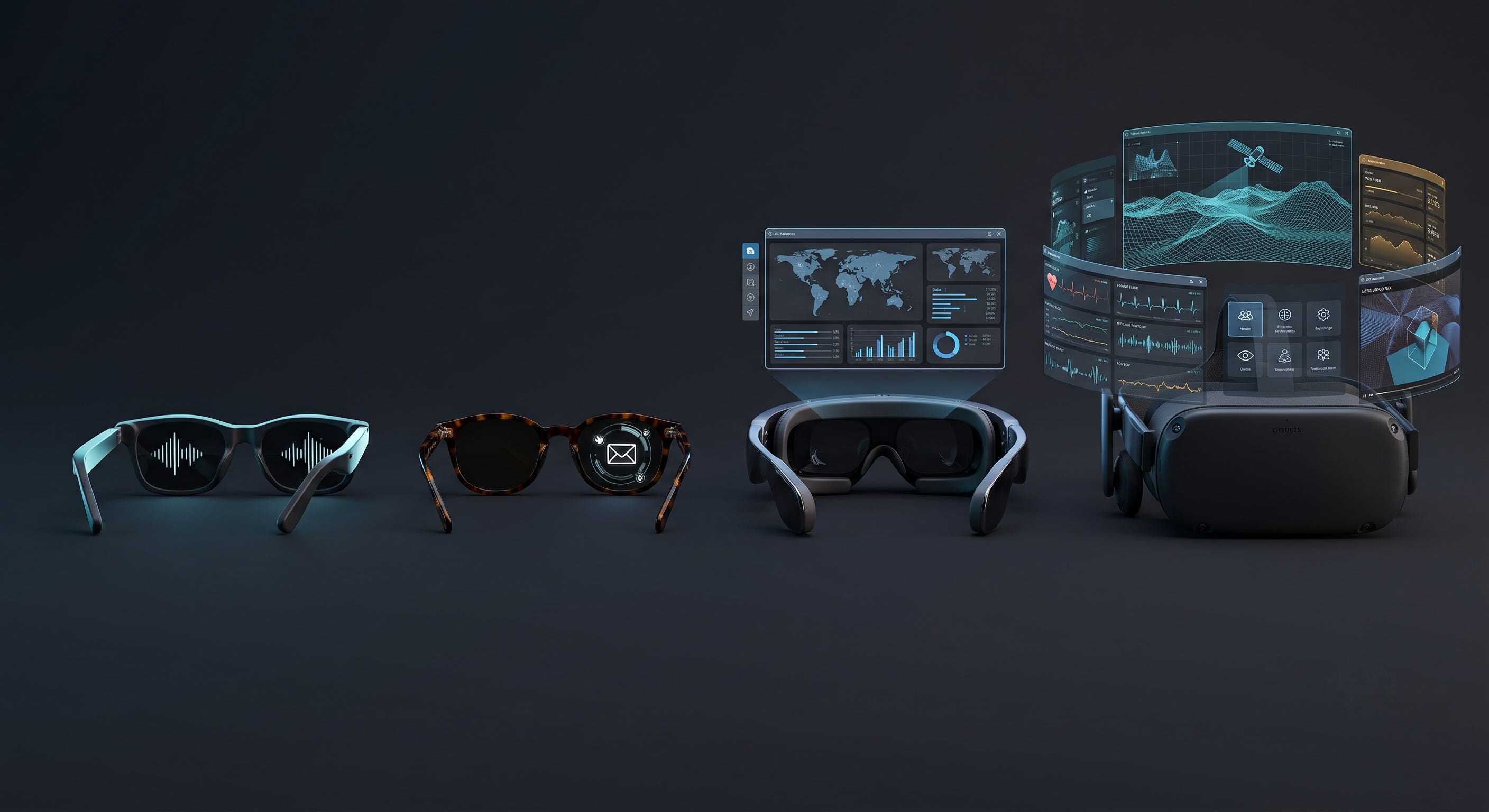
“Smart glasses” is really three products
When a report says “smart glasses are booming,” which glasses are they really talking about? There are three very different things into that one number, and the differences are major:
AI glasses with no screen. A camera, open-ear audio and an AI assistant in a normal-looking frame, like the Ray-Ban Meta. No display, no AR. This is the real growth engine: IDC expects around 13.6 million of these display-less glasses to ship in 2026, the single biggest XR segment, and they jumped 167% year over year in Q1. Meta alone holds about 72% of the smart-glasses market.
AR “Assisted reality.” A small, glanceable heads-up display for notifications, directions and translation. Even Realities, Virtues, etc. Still a small slice, but it is the interesting middle, and IDC expects it to gain real ground from 2027.
True AR glasses. Full displays that put content into the world, like Xreal’s Aura. This is what most people picture when they hear “AR,” and it is still niche: Xreal is around 2% of the market.
So let’s be honest with ourselves: “AR Glasses” didn’t arrive yet. AI on your face did. The visual-overlay future I’m as excited about as anyone is real, but it is a 2027-and-later story. Right now the thing selling is a camera and an assistant in a frame you would actually wear.
What about Apple?
If you want one signal that the center of gravity has moved, watch Apple. It pushed its long-rumored AI glasses to 2027, raised the Vision Pro to $3,699, and just lost the executive who led that hardware effort to OpenAI. When such a big actor is running late and losing the people building it, its a big signal of an immature market.
XR didn’t die. It grew up.
Now “VR is dead”. Not really. VR didn’t collapse. It specialized, which is exactly what I said would happen.
Location-based VR (the arcades, free-roam arenas and attractions you travel for) is on track to grow from about $1.9B in 2025 to $2.76B this year, and past $10B by 2031.
Enterprise and training VR keep posting real, measurable returns, from surgical training to safety drills and industrial simulation.
Then architecture, engineering and design, where a controlled, immersive environment is worth the friction of a headset.
These work for the same reason they always did: someone else owns the hardware, the environment is controlled, and the payoff justifies putting the thing on your face. The headset just stopped pretending to be a mass-consumer device you would wear at home every day.
The thesis from our XR & AI Trends whitepaper is playing out on schedule: AI is the brain, XR is the body. And the body is getting lighter.
Your playbook hasn’t changed. It just got proof.
If you are a brand, stop treating “XR” as one thing. It is two, with two timelines and two budgets:
Glasses are your always-on, AI-first layer. Utility first. Start experimenting now, because the devices shipping this year set the rules for the next three to five.
VR is for owned experiences you control: pop-ups, showrooms, events, training. The ROI is proven. Don’t ask your customers to buy a headset to meet your brand at home.
And AI is the thread through both. Whether it is a VR training module or an assistant in your glasses, AI is what makes it smart, not just immersive.
The XR industry isn’t dying. It is growing up: more specialized, and more useful.
Which side are you building for? Reply here or find me on LinkedIn. Let’s discuss.
Sources
IDC — XR grew 44.4% in 2025, glasses lead: https://www.idc.com/promo/arvr/
Counterpoint — VR headsets fell 14% in H1 2025: https://counterpointresearch.com/en/insights/global-vr-headset-market-in-h1-2025
IDC — display-less smart glasses dominate (~13.6M in 2026, +167% YoY Q1), display glasses gain from 2027: https://www.idc.com/resource-center/blog/smart-glasses-surge-the-xr-market-is-rewriting-its-own-rules/
Meta ~72% smart-glasses share, Xreal ~2% (IDC Mar 2026 tracker, via Next Reality): https://virtual.reality.news/news/apple-smart-glasses-late-2026-vs-metas-fragile-market-lead/
Meta Ray-Ban Display, the new small-display category: https://www.meta.com/blog/meta-ray-ban-display-ai-glasses-connect-2025/
Apple AI glasses pushed to late 2027: https://9to5mac.com/2026/05/31/apple-glasses-launching-late-2027-with-vision-air-to-follow-by-2029/
Vision Pro now $3,699: https://www.macrumors.com/roundup/apple-vision-pro/
Apple Vision Pro/glasses hardware chief joins OpenAI: https://www.techtimes.com/articles/319175/20260627/apple-vision-pro-hardware-chief-joins-openai-smart-glasses-deadline-looms.htm
Mordor Intelligence — location-based VR market growth: https://www.mordorintelligence.com/industry-reports/location-based-virtual-reality-vr-market