
Retail Strategy tips for 2026
A recent article on Vogue Business caught my attention, it's packed with gems for a successful retail strategy in 2026, and resonates with the trends we saw in our retail projects of 2025.

A recent article on Vogue Business caught my attention. It’s packed with gems for building a successful retail strategy in 2026, and the core message resonates deeply with what we see in the field every day: the stores that win are the ones that make people feel something and connect with the brand.
Here’s my take on their five key principles, with some additions from my own experience working with brands on immersive retail.
Stop saying “experiential”… But do it anyway.
The word “experiential” has lost its meaning. It’s been stamped on too many standard activations. But the strategy behind it matters more than ever.
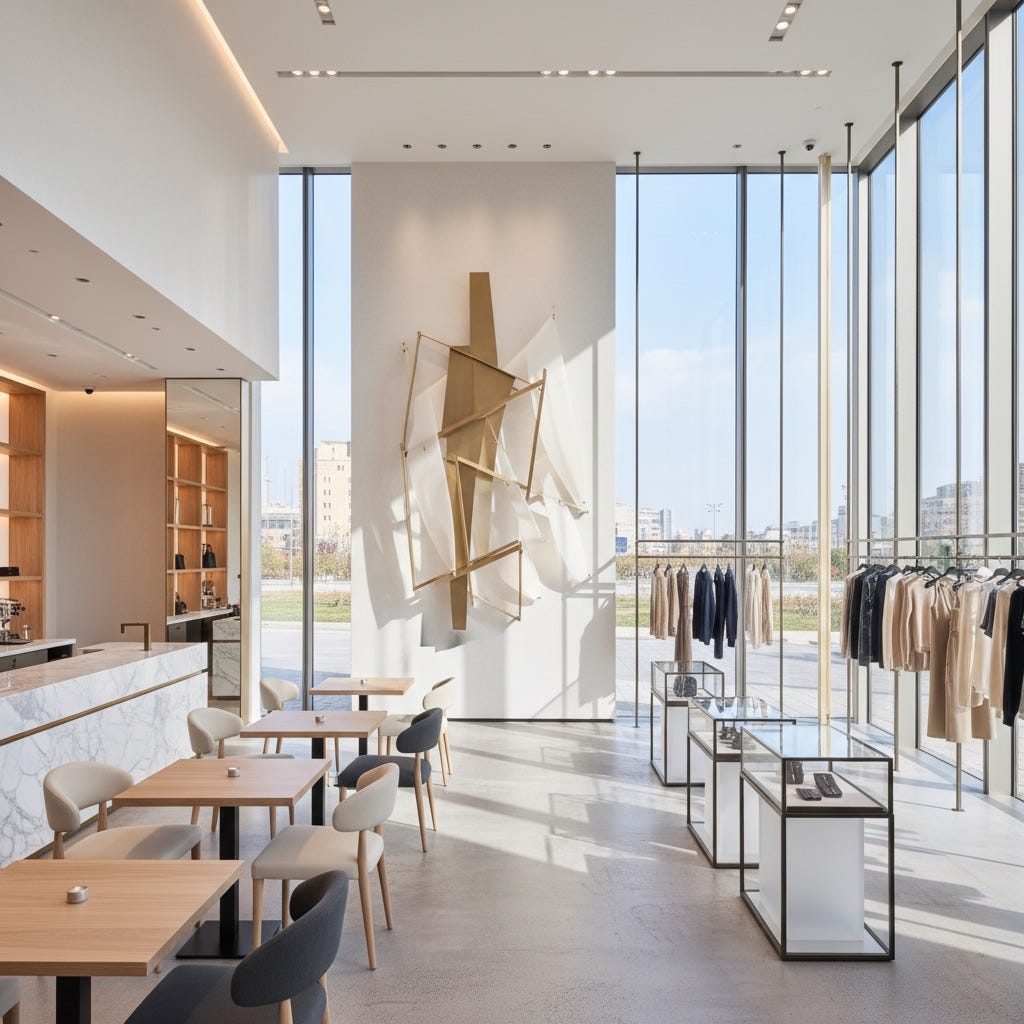
More and more stores are becoming multi-purpose spaces. Cafes, gyms, art galleries, cultural hubs co-existing with the brand inside the store. Kith London has a restaurant, a cereal bar, a cultural hub with a premium sound system. Sports Direct opened a location with a full Hyrox gym, Pilates studio, and sauna. These become reasons to visit.
The logic is simple: collaborations and emotional connection to shoppers is key. Almost everything else can be solved online. Price? Online. Availability? Online. Product information? Online. But how a space makes you feel? That requires walls, people, and intention.
My add: drop the word “immersive” too. Just keep the intent.
Be localized and dynamic
If you put a cafe or an interactive art exhibition in your shop, don’t replicate the same thing in all countries. That’s the fastest way to make a global brand feel generic.
Louis Vuitton gets this right. Different chefs in different flagship restaurants. City-specific window installations. Location-exclusive collaborations, books, chocolates. Every store feels like a destination, not a branch.
The principle extends beyond product. React to local events. Sports Games, Fashion Weeks, city festivals. Partner with local artists, local chefs, local creators. The more rooted your store feels in its neighborhood, the more reason people have to visit in person.
This is particularly relevant for international brands operating in Japan: the expectation for localized, curated experiences here is extremely high. Generic global rollouts don’t cut it.
Personal and bespoke customer service is back
It might sound obvious, but personal and bespoke customer service in shops is essential. Even more so in our always-connected but in fact deeply disconnected world.
Vogue Business highlights the return of the personal shopper as a real differentiator. People travel to see a specific person, not only a specific store.
For smaller brands, the model is different but the principle is the same: combine showroom, retail, and design studio in one space. Make the human interaction part of the value proposition, not an afterthought.
In an era where every online interaction feels algorithmically optimized, a genuine human connection in a physical space becomes a luxury product in itself.
Don’t forget the basics
Your store might be beautifully designed. The lighting might be perfect. The architecture might win awards. But if I can’t sit down to try my new pair of shoes, what’s the point?
This one hit home. Too many luxury and concept stores prioritize aesthetics over function. As one expert in the Vogue piece put it: “I don’t think people want to see the line around the shops anymore.” Comfort, accessibility, and practical design are not compromises. They’re the foundation everything else is built on.
Before adding the next Instagram-worthy installation, ask yourself: can my customers actually use this space comfortably?
AI stays in the background
We can’t write an article in 2026 without talking about AI. But here’s the thing: in retail, the best AI is the kind customers never notice.
Drop the AI assistant screens at the entrance. Nobody wants to talk to a chatbot when they can talk to a human. Instead, focus on what AI does brilliantly behind the scenes: customer data analysis, predictive inventory management, personalized recommendations that inform your staff (not replace them), and real-time demand forecasting.
The bottom line
The Vogue Business piece closes with advice that sounds almost too simple: “Go back to basics and execute well.” But after years of chasing the next shiny thing (metaverse activations, NFT drops, AI chatbots greeting customers at the door), “basics done well” is genuinely revolutionary.
Make people feel something. Know your neighborhood. Treat customers like humans. Make your space functional. Let technology do its job quietly.
The brands that stay focused on what they do best, and on their customers, will win.
Source: What a Winning Retail Strategy Looks Like in 2026 | Vogue Business