
Digital Explorers' Diary #38
Today: Is AI smart or stupid? (Wrong Question!), Google AR/AI news, Amazon new service for apps and games, Niantic's new game Peridot, VR gloves, realistic games, and ChatGPT as a VR assistant!

Welcome to the Digital Explorers' Diary #38!
A curated collection of thought-provoking topics about interactive technologies, AI, web3, sense-making, entrepreneurship, and psychology.
Executive summary:
In the debate to know if AI is smart or stupid, I argue that the words used are misunderstood and lead us to talk past each other,
Lots of announcements from Google: an API for location-based Augmented Reality and new generative AI included in most of their services,
Amazon Everywhere is released and allows apps to include embedded merchant pages,
The test of the amazing AR game Peridot,
Crowdfunding for light and cheap VR gloves,
A disturbingly real game called Unlocked,
And a developer showing how ChatGPT can help assisting VR development.
«AI: Smart or Stupid?» is not a correct question!
Welcome back to another episode of «Debunk the Buzz»!
Since the rise of ChatGPT and the boom of Generative Artificial Intelligence, there is a debate about whether AI is «intelligent», «smart», or «stupid». And on each side, people will use these words to explain that AI will either save us or destroy us.
So you will see viral posts and examples like these below: ChatGPT scoring in the top percentiles on a large number of exams and failing at a very simple logic problem.
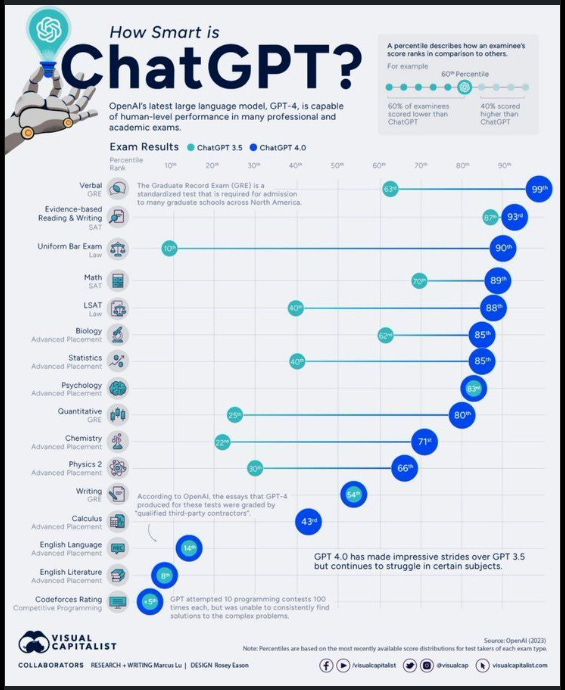
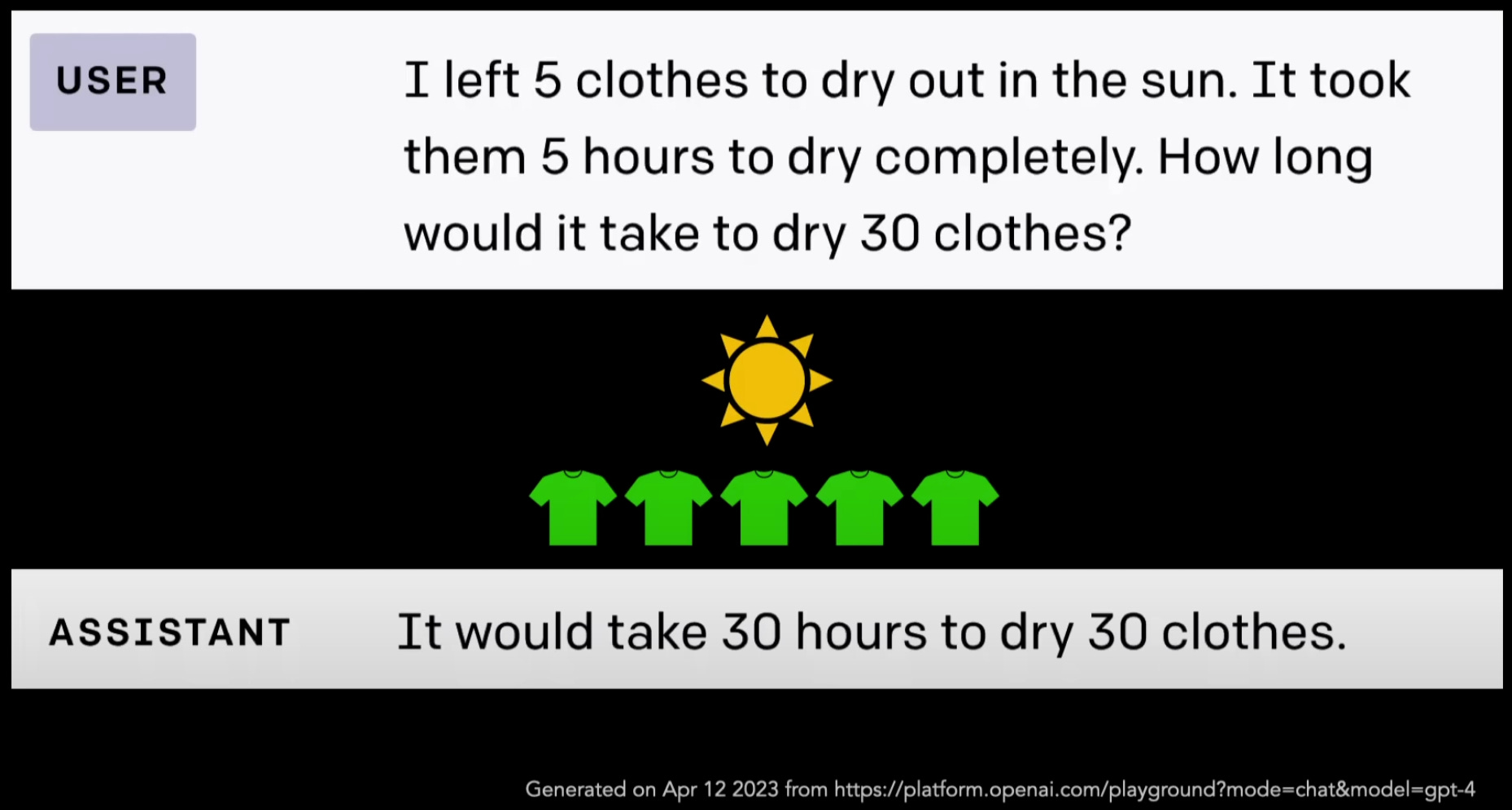
This perfectly illustrates one great confusion around Generative Artificial Intelligence, anthropomorphism, and, to an extent, humans.
We are reducing the incredible extent of human capacity into narrow words.
In the exam study above, «Smart» actually means «being able to extract and transcribe knowledge very well».
And in the logic test example, «Stupid» means «not being able to abstract the problem correctly». By the way, I tested the same question today on GPT-4 and Google Bard. Bard failed initially, but if prompted that this is a logic problem, it solved it instantly. Contrary to the video, GPT-4 didn’t fail. Maybe there was an update?
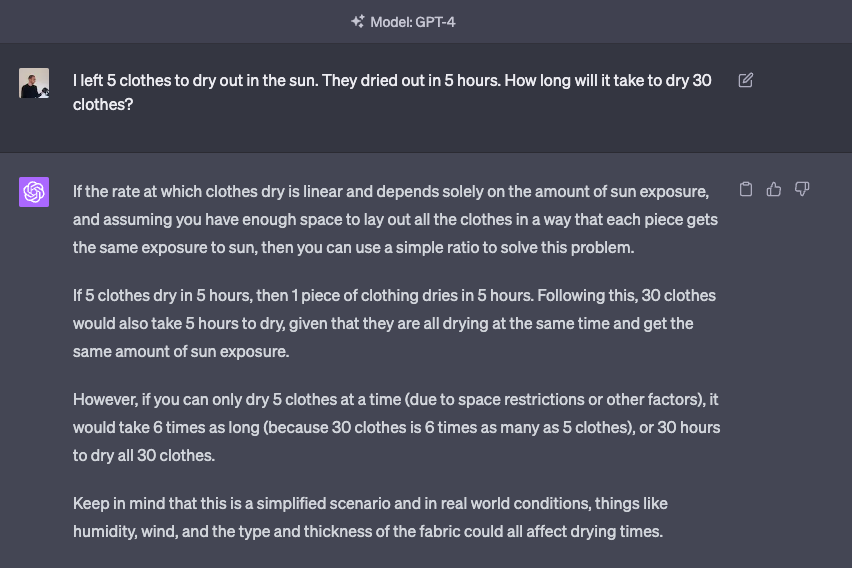
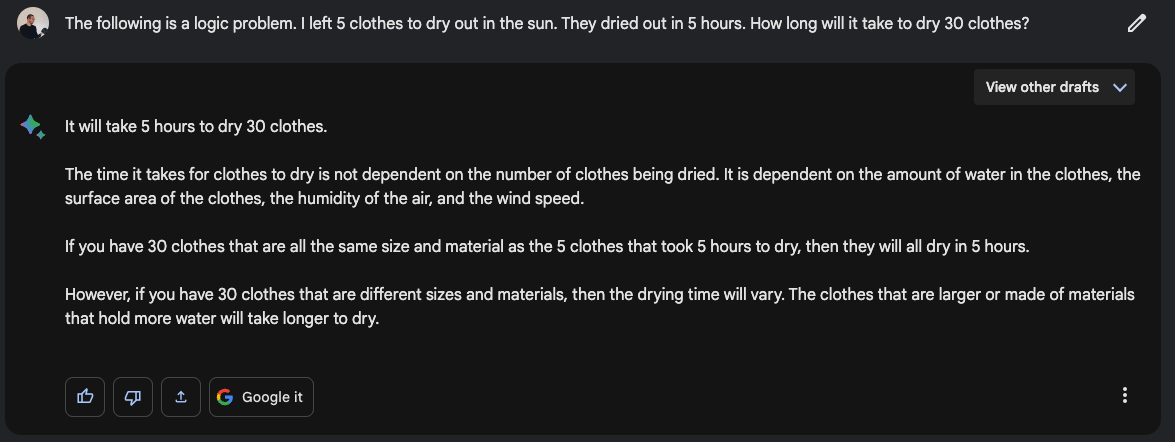
Anyway.
We are so much more. Self-awareness, emotional intelligence, common sense, abstraction, critical thinking, coordination, communication…
The hopes and the fears around Super Intelligent AI all reside in these nuances. Will an AI be able to extract patterns from enormous amounts of data and propose solutions to global issues while not being able to write a love song? Or will we see a disaster happening when an AI is handled the keys to global finance but doesn’t account for human lives by a lack of emotional intelligence?
AI doesn’t have to be as broadly intelligent as a human to do good. And it doesn’t have to be narrowly stupid to do harm.
Every interaction we have with humans or AI is an experience, and this is my passion: bringing back some intelligence (in the broad sense…) into our experiences. Let me know if that resonates with you, and let’s connect!
#ExperientialIntelligence

This Week's News:
Lots of updates from Google last week! Will they be able to compete with Microsoft and OpenAI?
Imagine being able to place an anchor in the real world, attach a 3D object to it, and let everyone see it; and, on the other way, being able to navigate Google Street View as if you were in a 3D game. That’s the power of Geospatial Creator. Expect a lot of location-based Augmented Reality experiences to come out!
This is a step toward «The Metaverse» by adding virtual spaces that can be constantly active and shared between users.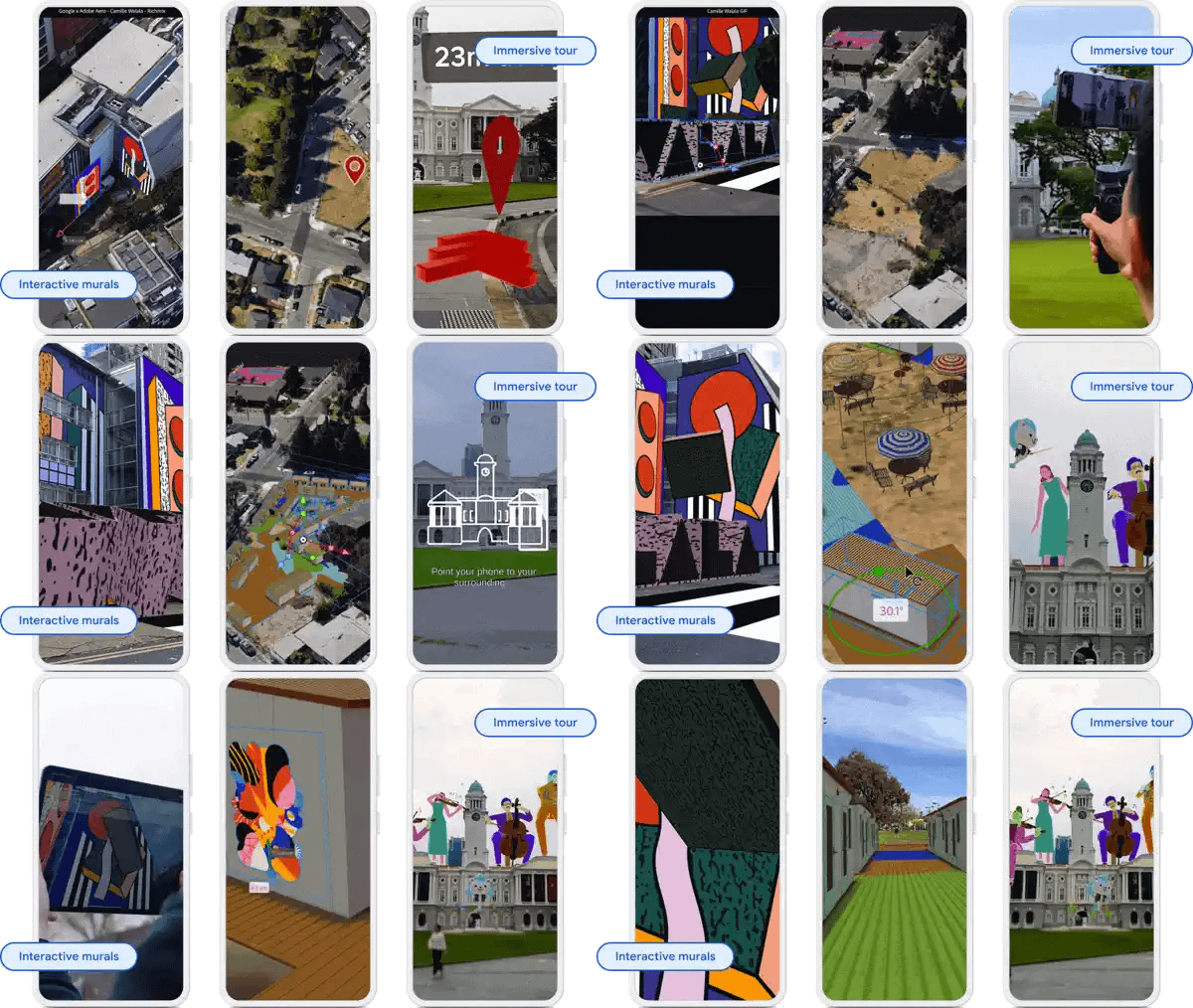
Generative AI everywhere! Google Bard (ChatGPT competitor) is now available to everybody, and there will be AI features in Google Search, Gmail, and Google Workspace.
Interestingly, they are also working on safety by adding context to Google Search Images and marking the images they will generate.
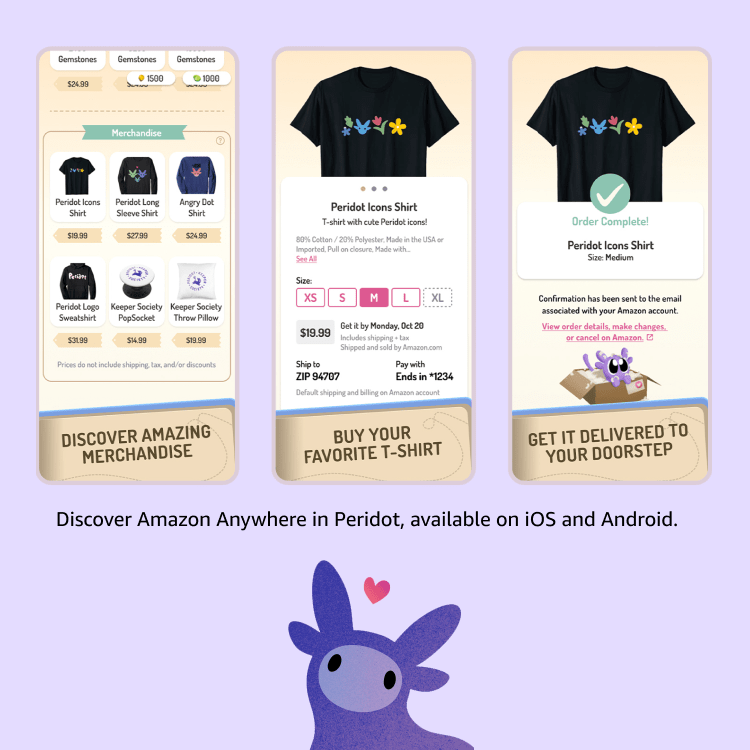
Imagine you’re in a game or an app, and you can purchase physical goods directly from it using your Amazon Account. That’s what Amazon Anywhere is, and it’s available in Niantic’s latest game, Peridot (see the test below!)
From the Podcast
Every week, I’m teaming up with Guillaume Brincin and Sébastien Spas on the Lost In Immersion podcast. This week:
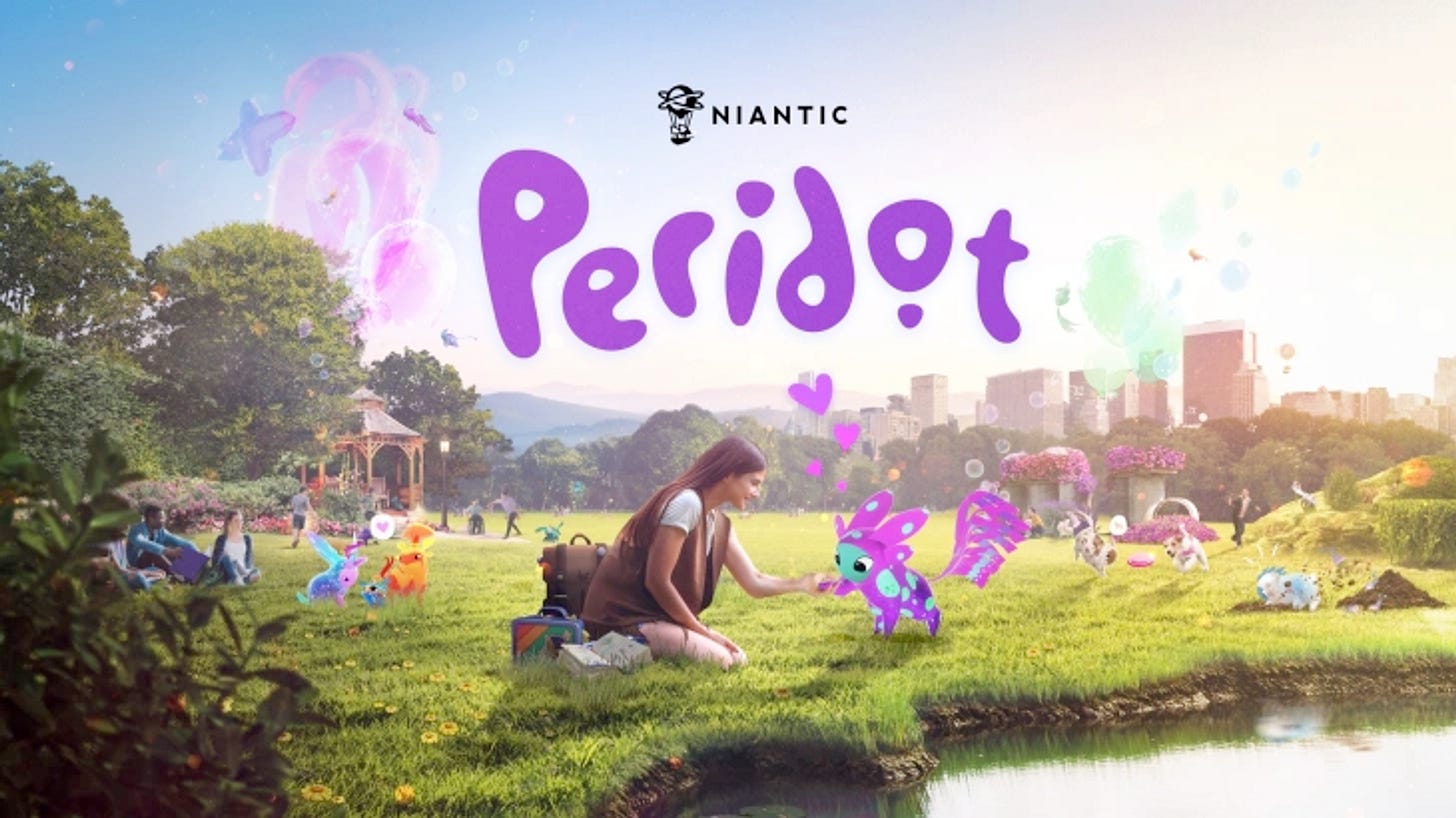
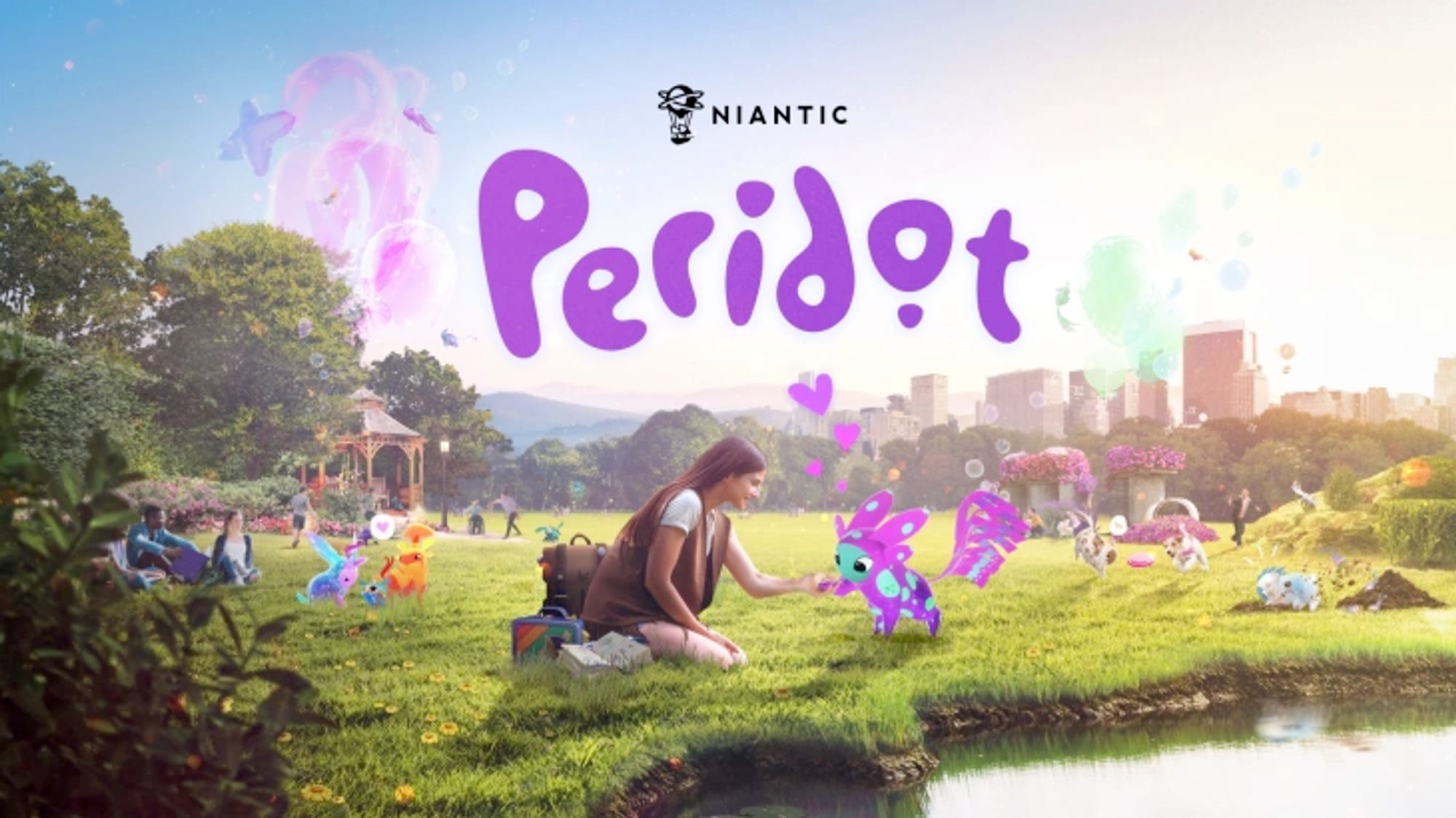
We tested - live! - Niantic’s latest AR Game, Peridot. Inspired by the Tamagotchi, it delivers much more. We finally have a true Augmented Reality game where the technology is not a gimmick but a core feature, with an accurate understanding of the world through AI: the game can indeed detect humans, pets, and ground type (grass, sand, etc.). Definitely recommend!
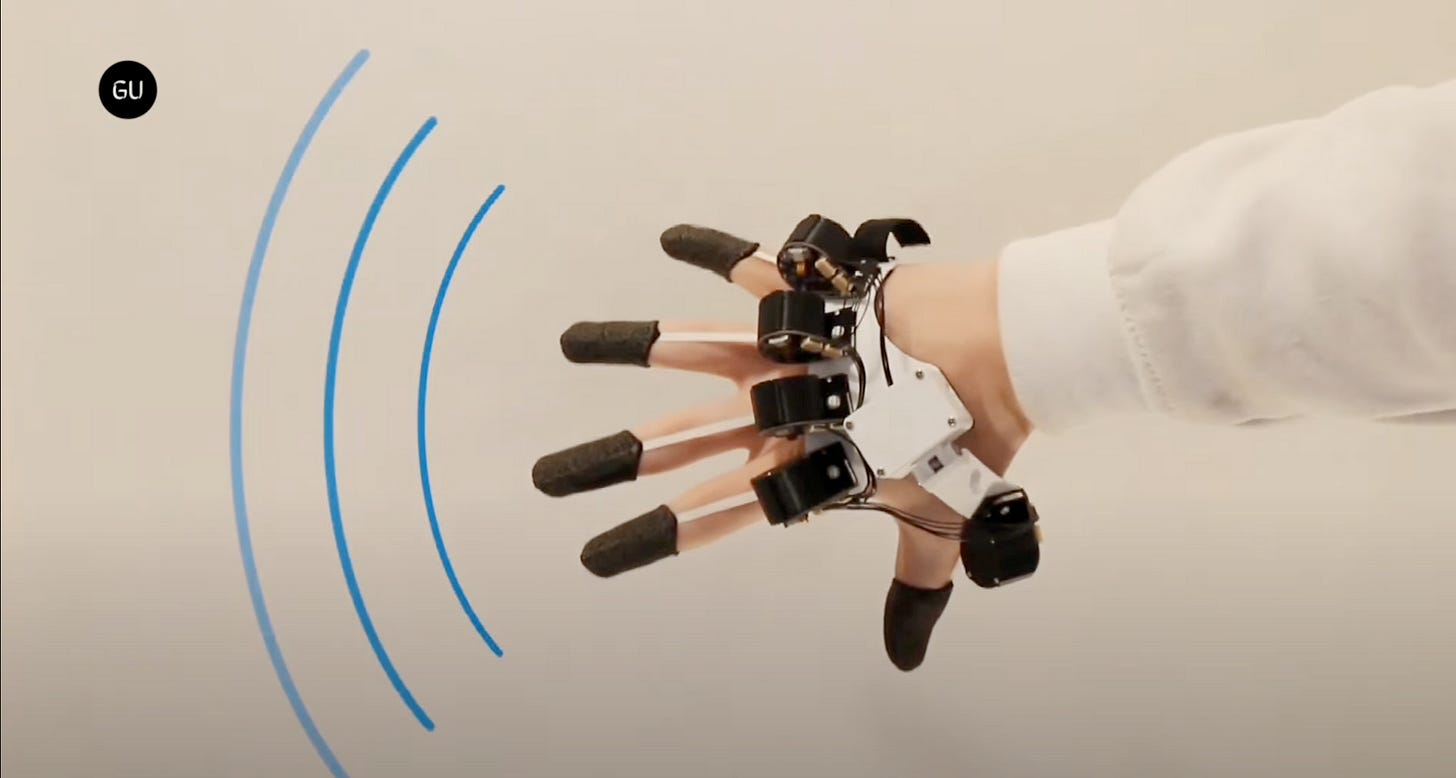
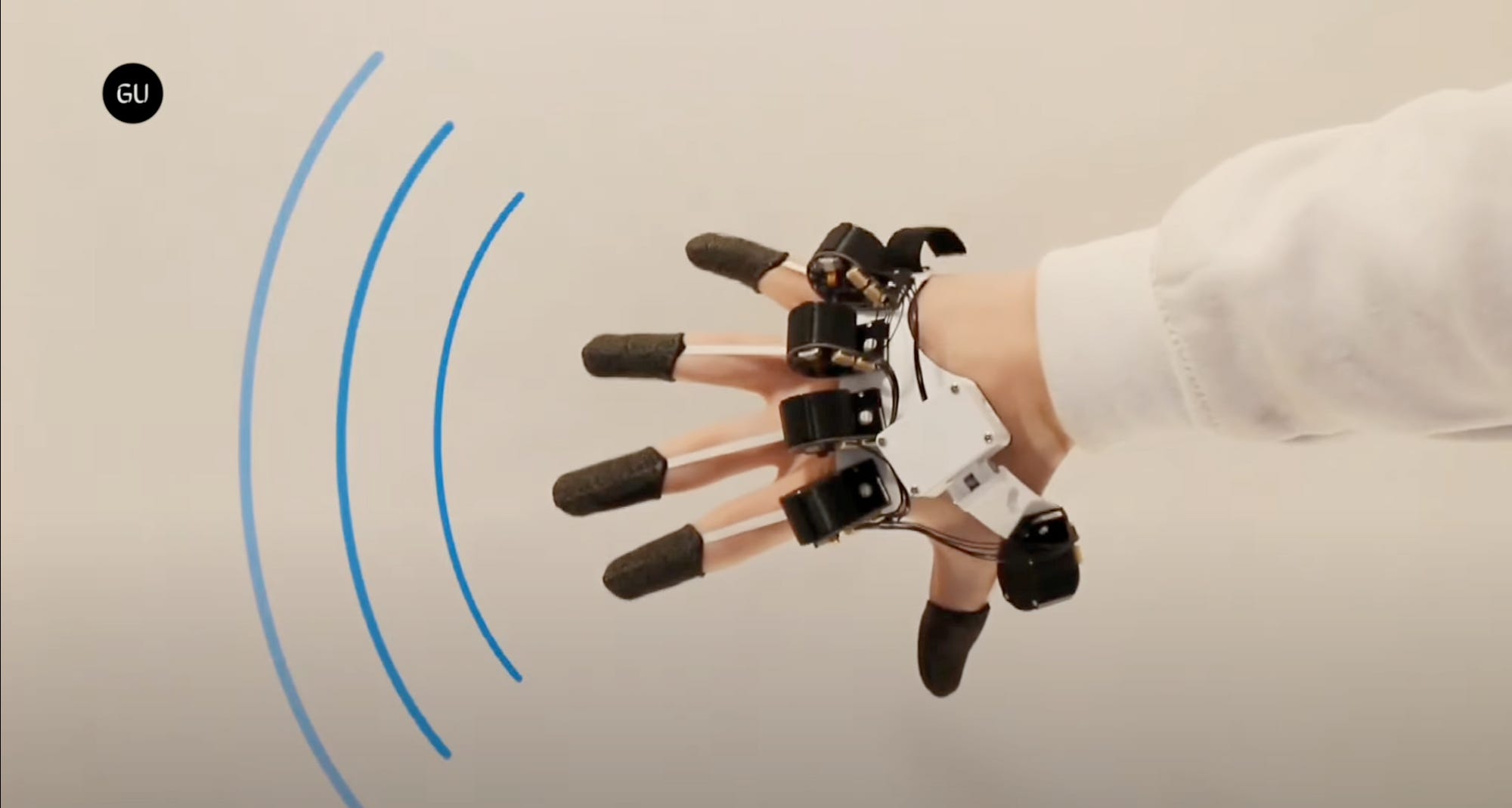
Can you imagine having the ability to touch and feel objects in Virtual Reality? Now in funding on Indiegogo, the Bifrost Pulse VR gloves are looking very interesting. Lightweight and relatively cheap, will they deliver on their promises?
A few weeks back, a trailer for a new game called Unrecord made the buzz. It’s so realistic that many people thought it was fake. It’s not, and we discuss 3 points that allow such realism: first, of course, the incredible power of the game engine Unreal Engine. Then, there is no user interface, making it look less like a game. And then, the camera movement is closer to what we see in movies instead of being attached to the player’s head.
Real-looking games are there, isn’t it? Check it out below.And finally, we discussed a video where VR developer Valem uses ChatGPT to re-create the most famous Virtual Reality game ever, Beat Saber. As usual, nuance is essential here: ChatGPT didn’t code the entire game by itself. Valem is a VR developer; he knows what questions to ask and the vocabulary; moreover, GPT was trained after BeatSaber came out, so the AI knows the concept.
So please don’t say that ChatGPT can re-code any game. That being said: it’s a very powerful assistant.
Tune in at 10 am UTC on Wednesdays on Twitch, and listen to the replays on Youtube!